
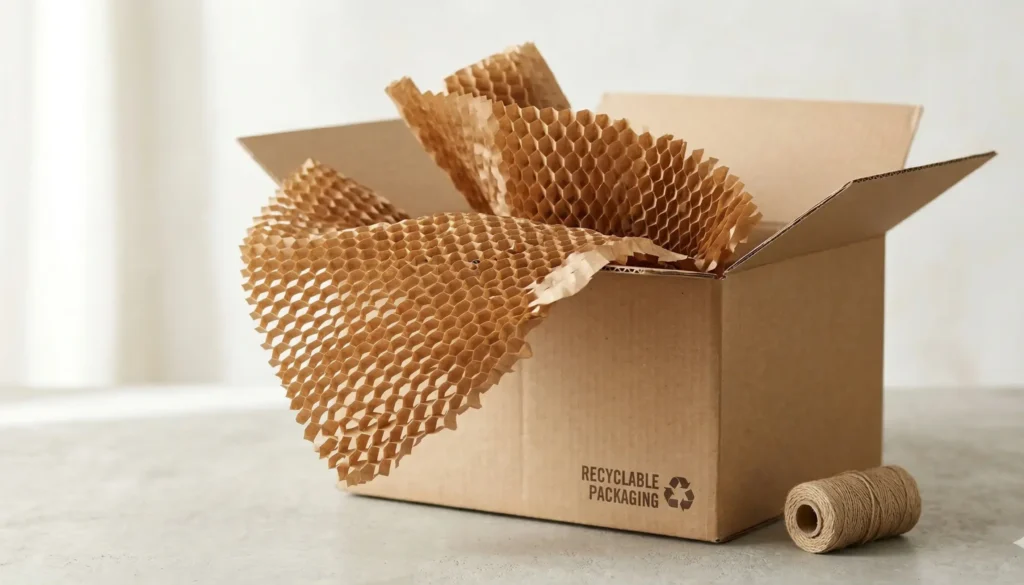
Let’s be honest: nobody actually likes plastic bubble wrap anymore. Sure, it’s fun to pop, but for a business running a tight warehouse, it’s a nightmare. It takes up a massive amount of storage space, it’s frustrating for your customers to dispose of, and quite frankly, it’s terrible for the environment.
Enter honeycomb packaging. Engineered from kraft paper to mimic the natural, crush-resistant structure of a beehive, it’s incredibly strong, stores totally flat, and goes straight into the curbside recycling bin.
If you’re ready to upgrade your unboxing experience and cut down on plastic, here are 10 clever honeycomb inserts you can use to replace bubble wrap right now.
1. The Classic: Expandable Honeycomb Wrap
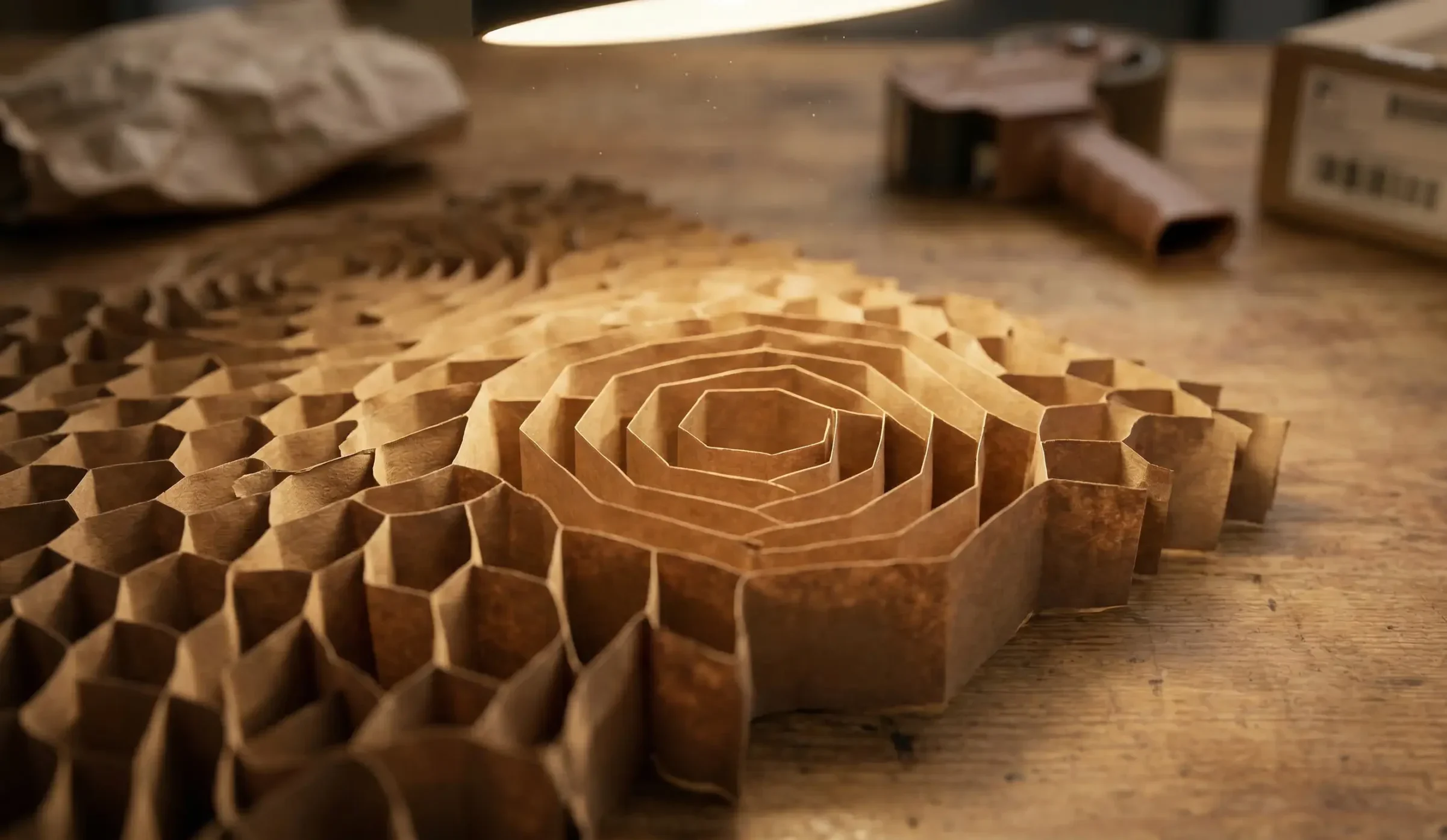
If you need a direct, one-to-one swap for your bubble wrap rolls, this is it. It sits flat on a dispenser, but when you pull it, the die-cut paper expands into a 3D hexagonal web.
- The real-world benefit: It naturally interlocks with itself, meaning your packing team doesn’t have to waste time wrestling with packing tape. Plus, one small pallet of flat honeycomb wrap can replace an entire truckload of bulky plastic bubble rolls.
2. Custom Die-Cut “Nests”
Ever opened a premium smartphone box and noticed how the device sits perfectly in a custom cutout? You can do that with heavy-duty honeycomb board.
- The real-world benefit: It replaces ugly, squeaky styrofoam molds. It gives your product unshifting drop protection while making your customer feel like they are unboxing a high-end luxury item.
3. Edge and Corner Protectors
If you ship furniture, canvas art, or appliances, you know the heartbreak of a product arriving with a smashed corner. Thin plastic guards or wadded-up bubble wrap rarely survive a bad drop.
- The real-world benefit: Thick, rigid honeycomb L-guards absorb the brute force of an impact, saving you the headache and cost of return shipping for damaged goods.
4. Flexible Bottle Sleeves
Shipping glass is stressful. Instead of wrapping bottles in miles of plastic or using expensive inflatable air-column bags, pre-formed honeycomb sleeves slide right over cylindrical items.
- The real-world benefit: They stop wine bottles, olive oil jars, and cosmetics from clinking together in transit, while giving your shipment a clean, organic aesthetic.
5. Interlocking Grid Partitions
If you run a subscription box or ship gift sets, wrapping six individual items in plastic takes way too long. Honeycomb partition inserts slide together to create individual, rigid cells within your standard boxes.
- The real-world benefit: Your packers can just drop the items into their designated slots and seal the box. It slashes fulfillment time and looks incredibly organized when the customer opens it up.
6. Heavy-Duty Block Pads
For industrial shipping, standard bubble wrap is useless—heavy machinery parts will pop the bubbles in seconds. Honeycomb block pads are thick panels of hexagonal cells that can hold massive amounts of weight.
- The real-world benefit: You get the extreme crush resistance of Expanded Polystyrene (EPS) foam blocks, but in a format that your commercial clients can easily toss in the cardboard recycling bin.
7. Suspension Inserts
These are brilliant for fragile tech. A rigid honeycomb frame uses a thin, flexible film to suspend a laptop or tablet securely in the dead center of the box.
- The real-world benefit: It keeps the fragile item entirely away from the impact zones on the outer edges of the box, completely eliminating the need to fill the empty space with packing peanuts.
8. Pallet Layer Pads
When stacking heavy bulk shipments, weight distribution is everything. Instead of using thin corrugated plastic sheets between layers of boxes, honeycomb layer pads act as structural shock absorbers.
- The real-world benefit: They prevent the boxes on the bottom row of your pallet boxes from being crushed under the weight of the boxes on top, ensuring your freight arrives intact.
9. Snap-and-Place Void Fill Blocks
We all know the frustration of opening a box only to have an avalanche of static-cling styrofoam peanuts spill out onto the floor. Pre-scored honeycomb blocks are the antidote.
- The real-world benefit: Your packers can easily snap off a block of honeycomb to fill a weirdly shaped empty space in a box. It locks the product in place securely without making a mess in your customer’s living room.
10. Honeycomb-Lined Padded Mailers
For smaller items like jewelry, books, or apparel, you don’t need a whole box. But standard poly-bubble mailers are notoriously hard to recycle because they fuse plastic and paper together.
- The real-world benefit: Mailers lined with a layer of expanded honeycomb paper offer the exact same padding as bubble envelopes, but they are 100% recyclable. No separating materials required.
The Bottom Line
Making the switch to honeycomb packaging isn’t just an eco-friendly PR move. It genuinely saves warehouse space, speeds up your fulfillment line, and shows your customers that you care about the details.
Looking for a reliable local partner? Check out our list of the Top 10 Honeycomb Packaging Suppliers in Australia or get a custom quote from our team today to find the perfect sustainable solution for your products!
Frequently Asked Questions About Honeycomb Packaging
Is honeycomb packaging as protective as bubble wrap?
Yes! Honeycomb packaging offers excellent shock absorption. The interlocking hexagonal cells provide a rigid, crush-resistant structure that rivals and often exceeds standard plastic bubble wrap, making it perfect for protecting fragile items like glass, ceramics, and electronics.
Do I need to use packing tape with honeycomb wrap?
No, you do not. One of the biggest benefits of expandable honeycomb paper wrap is that the 3D cells naturally interlock with each other when wrapped around an item. This secures the product tightly without the need for additional plastic tape.
How do customers recycle honeycomb packaging?
Because honeycomb inserts are made entirely from kraft paper, they are 100% biodegradable and recyclable. Customers can simply flatten them and toss them directly into their standard curbside cardboard recycling bin no need to separate materials like you do with poly-lined bubble mailers.
Is honeycomb packaging cheaper than bubble wrap?
While the upfront cost of a roll of honeycomb paper might be slightly higher than cheap plastic bubble wrap, it significantly reduces warehouse storage costs (as it stores flat) and speeds up your fulfillment process. Plus, by eliminating the need for packing tape and reducing dimensional shipping weight, it often proves to be highly cost-effective overall.