
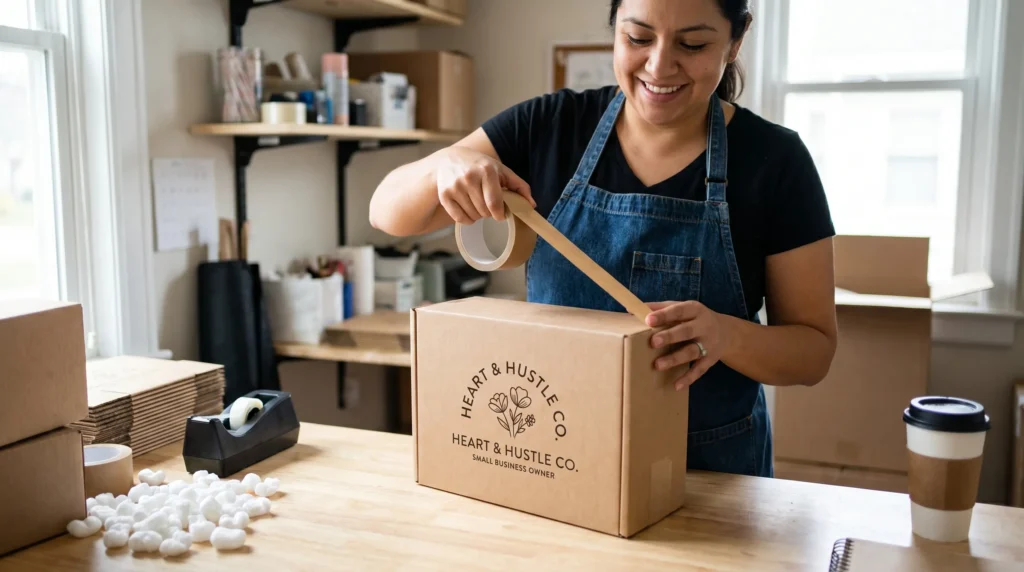
Most custom-packaging suppliers in Australia force you to order 500, 1,000, or even 5,000 units at a time.
“No minimum order” (no-MOQ) suppliers let you order as few as one.
For an SME, that single difference reshapes what you can do with packaging from rapid testing of new designs to launching limited-edition runs without tying up working capital.
This guide explains how no-MOQ packaging works, when it pays off, what to look for in a supplier, and where it doesn’t make sense.
What “no minimum order” actually means in custom packaging
In the packaging industry, minimum order quantity (MOQ) is the lowest number of units a supplier will accept on a single order.
It exists because traditional printing presses (especially offset and flexographic) carry high setup costs like plates, dies, and color matching.
Spreading that setup over 5,000 units makes each one cheap.
Spreading it over 100 makes each one expensive.
The MOQ is the line where the supplier stops being willing to absorb those setup efforts.
No-MOQ suppliers use digital printing and on-demand cutting.
There is no plate to make, and no minimum print run is required.
You can order one box, ten boxes, or ten thousand boxes.
While the cost dynamics change as volume increases, the door is completely open at a quantity of exactly one.
In Australia specifically, no-MOQ is rarer than in markets like the US or UK, where larger volume justifies the digital-print investment.
Most local suppliers still require minimums between 250 and 2,000 units.
A handful of Australian manufacturers including Custom Boxes operate fully on no-MOQ digital production.
Why MOQ traps small businesses (the real cost no one mentions)
The obvious problem with a 500-unit MOQ when you sell 50 units a month is that you sit on 9 months of inventory.
The less-obvious problem is what that inventory locks you out of doing.
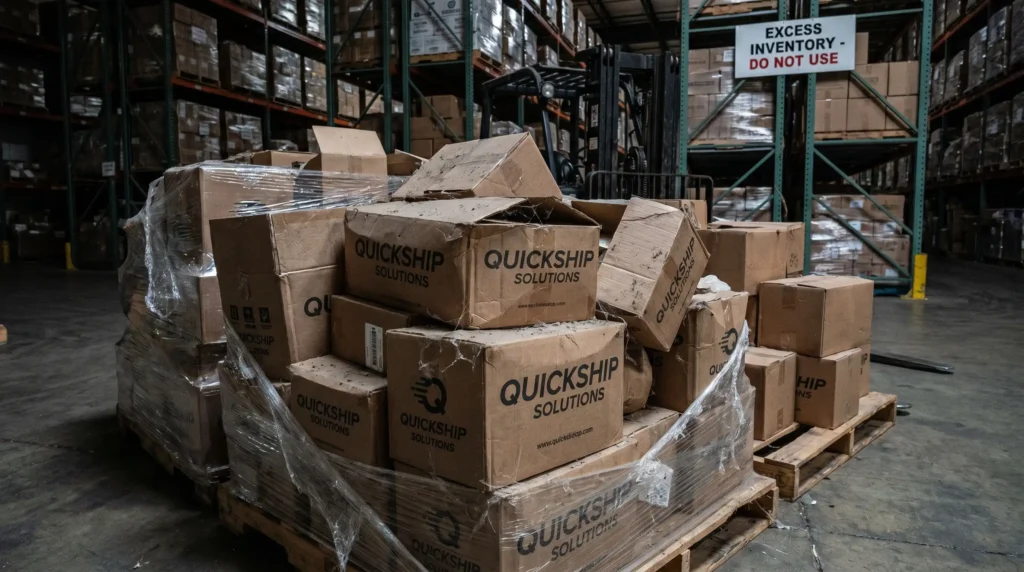
Consider an e-commerce brand that launches a new product line every quarter.
With a 500-unit MOQ, every quarter they either:
- Over-order to commit to a brand and hope it sells (working capital tied up, storage required, write-off risk if the design doesn’t move).
- Skip custom packaging and use plain brown boxes (lose the brand differentiation that drove them to the supplier in the first place).
- Use the same generic packaging for every product line (defeats the unboxing experience that is supposed to drive repeat orders).
None of these options serve a small business well.
The MOQ isn’t just a quantity rule it is a strict creative constraint.
No-MOQ removes that constraint.
The same brand can run a different printed mailer for every product, every season, and every limited edition.
Prototype with five boxes, test with fifty, scale to five hundred all from the same supplier, all on the same print system, and all with ultimate flexibility.
5 real-world scenarios where no-MOQ wins
The clearest way to see the value of no-MOQ is in specific scenarios where the alternative (high MOQ) breaks down.
Here are five situations Custom Boxes sees regularly across Australian SME customers.
- Beauty brand testing a new design.
An e-commerce skincare brand wants to A/B test two unboxing experiences.
With a 500-unit MOQ, that means 1,000 boxes ordered and stored and you only test once before heavy commitment.
With no-MOQ, they order 50 of each design, run a 2-week trial, and comfortably scale the winner. - Subscription box launching a limited-edition collab.
A monthly subscription box partners with a local artist for a single-month box design.
They need 280 boxes for one month, then never again.
A 500-unit MOQ means 220 boxes wasted.
No-MOQ means 280 boxes exactly. - Crowdfunding fulfilment.
A Kickstarter campaign closes with 137 backers.
The product needs custom packaging.
Without no-MOQ, the founder is either over-ordering (a heavy cash hit during a cash-sensitive launch) or fulfilling in generic mailers (a brand fail at the moment that matters most).
No-MOQ delivers 137 custom boxes with zero waste. - Wholesale brand testing a retail launch.
A wholesale supplier wants to test direct-to-consumer with branded retail packaging.
They need 200 retail-ready boxes to validate the channel before investing in massive inventory.
No-MOQ delivers seamlessly; high-MOQ kills the experiment. - Art logistics company shipping a single high-value item.
A gallery needs one custom-cut art logistic box for a one-off painting shipment.
With a 500-unit MOQ, this isn’t a buying decision it is an absolute non-buy.
With no-MOQ, the gallery becomes a recurring customer for every fragile shipment they take on.
In every case, MOQ blocks an SME from doing what their business actually requires.
No-MOQ lets them do it.
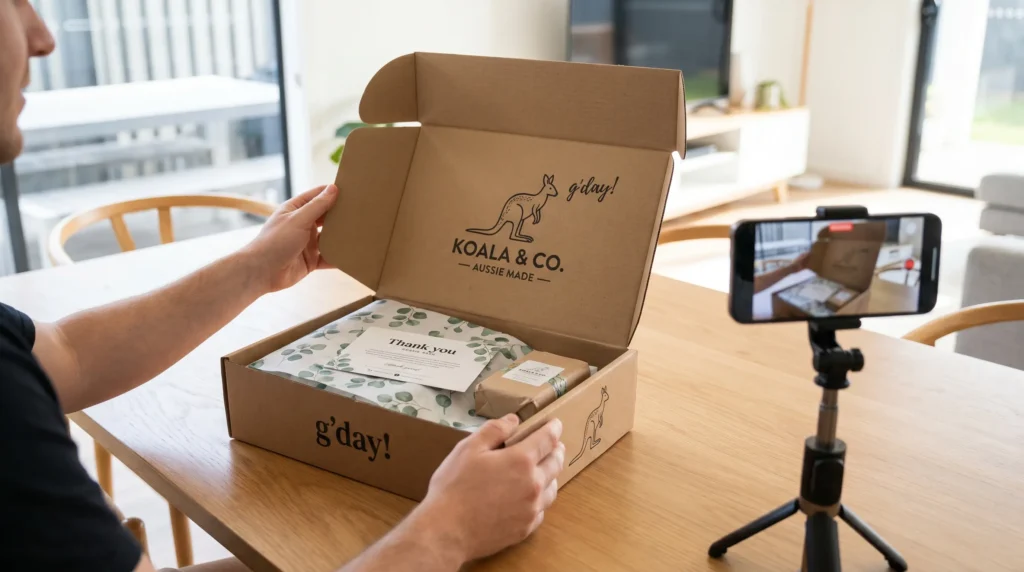
The reality: working capital vs unit cost perception
The most common objection to no-MOQ is that the cost per unit appears higher on paper.
It is true that a massive 5,000-unit run of mailer boxes will have a lower per-unit cost than an agile 50-unit run.
But focusing on cost-per-unit alone misses the most critical metric for small businesses: working capital tied up in unsold inventory.
Here is a conceptual comparison for a small e-commerce brand deciding between a bulk run and an agile no-MOQ run:
| Scenario | Unit Cost Perception | Quantity Ordered | Inventory Duration | Working Capital Impact |
|---|---|---|---|---|
| 500-unit Bulk Run | Lowest per unit | 500 | 10 months | Massive upfront cash locked in dusty storage. |
| 50-unit no-MOQ | Higher per unit | 50 | 1 month | Frees up cash flow for marketing and ads. |
| 100-unit no-MOQ | Moderate | 100 | 2 months | Balances unit savings with high liquidity. |
The no-MOQ option might have a higher unit cost initially.
But the SME completely avoids trapping valuable cash in dead inventory, can iterate on design four times in the same 10 months, and isn’t locked in if the brand pivots.
For an SME where every dollar of working capital matters, that flexibility and cash-flow liquidity is usually worth far more than the bulk discount.
(here image: Bar chart showing working capital tied up in MOQ vs no-MOQ packaging orders)
The dynamics flip at higher volumes: once a brand is shipping consistently above 500 units a month, MOQ-based bulk ordering becomes the clear winner.
The transition point is around 300 units per month.
Below that threshold, no-MOQ is the better economic choice not just the better creative choice.
What to look for in a no-MOQ packaging supplier
Not all “no minimum order” suppliers are equal.
Some accept small orders but treat them as low-priority with long lead times, generic stock sizes only, and no real customization.
A real no-MOQ supplier should offer:
- Genuine custom sizing.
“Choose from these 12 box dimensions” isn’t custom; it’s stock.
A real no-MOQ operation cuts to your exact dimensions. - Full-colour digital printing.
Single boxes printed on digital presses, not scaled-back offset runs. - Stated lead times.
A typical no-MOQ order should ship in 5 to 10 business days.
Anything longer (3+ weeks) signals the supplier is batching no-MOQ orders behind larger ones. - Local production.
Imported no-MOQ packaging is rarely no-MOQ in practice because minimums get reintroduced via shipping.
Australian-made is faster and more reliable. - Transparent scaling.
A real no-MOQ pricing model lets you scale up smoothly without punitive pricing designed to push you toward strict MOQ tiers. - Eco-friendly material defaults.
Recyclable cardboard and sustainable inks.
Single-unit orders should not cost you the environmental positioning your brand depends on. - No setup fees.
The whole point of no-MOQ is having zero setup commitment.
At Custom Boxes we operate on all seven.
If you’re evaluating an alternative supplier, the seven-point list above is a fair benchmark to ask them against.
(here image: Custom Boxes Gregory Hills facility printing a single custom mailer box)
Where no-MOQ doesn’t make sense
To be honest about the tradeoff: there are situations where traditional bulk suppliers genuinely win.
- High-volume consistent runs (5,000+ units of the same SKU repeatedly).
Offset printing economics make bulk ordering the most sensible path here. - Specialty materials that require run setup costs (some specialty corrugated grades, certain foil-stamped finishes).
- Brands with completely stable design and stable volume that aren’t iterating.
If your business is in one of those three categories, a bulk MOQ is probably the right model.
For most Australian SMEs and certainly for any brand under $3M in annual revenue iterating on packaging no-MOQ is the significantly better fit.
How to start
The no-MOQ option means there is no commitment and zero risk in trying it.
Order one box literally one to evaluate the quality, printing, and lead time.
Compare it to your current supplier.
Make a decision based on the actual product in your hands, not the marketing.
You can get a free quote for any product line mailer boxes, standard boxes, full-colour printed boxes, or any other category at any quantity from 1 up.
We offer rapid quoting, production in 5 to 10 business days, and delivery Australia-wide.
Frequently Asked Questions
What does no minimum order quantity mean?
No minimum order quantity (no-MOQ) means you can order any quantity of custom packaging starting from exactly 1 unit.
Most traditional packaging suppliers require minimums of 500 to 5,000 units per order to justify their setup costs.
No-MOQ suppliers use digital printing and on-demand cutting, meaning the intense setup efforts are removed you can order one box or one thousand from the same production line.
Is no-MOQ packaging more expensive per unit?
At small quantities, the unit cost is higher than a massive bulk run.
But the total upfront investment is drastically lower because you are not buying 10 months of inventory in one go.
For small businesses ordering under 300 units per month, no-MOQ is usually the better overall economic choice once you factor in working capital, cash flow liquidity, and storage costs.
How fast is production for a single custom box?
A typical no-MOQ order at Custom Boxes ships in 5 to 10 business days from order confirmation, regardless of whether you are ordering 1 box or 500.
Rush production is available on request for urgent orders.
Can I get full-colour printing on a single box?
Yes.
Custom Boxes uses digital CMYK printing, which means full-colour design is available at any quantity from 1 up.
There are no setup fees and no plate-making constraints like with traditional offset printing.
Will the quality be the same on a 1-box order versus a 500-box order?
Yes.
The digital presses we use produce identical print quality across all order sizes.
The precision and vibrancy remain consistent whether you order a prototype or a production run.
What sizes of boxes can I order at no-MOQ?
Any size you need.
Boxes are cut to your exact dimensions, not chosen from a restricted stock list.
Mailer boxes, pallet boxes, art logistic boxes, full-colour printed boxes, and every other product line on the Custom Boxes catalogue is available at no-MOQ.
Do I need to provide artwork files myself?
You can supply your own artwork (we accept AI, PDF, and other vector formats) or work with our design team for custom artwork.
Either way, no setup fees apply.
Does no-MOQ apply to overseas orders?
Custom Boxes ships Australia-wide as standard.
International shipping is available case-by-case, but no-MOQ production is optimized specifically for the rapid needs of the Australian market.