
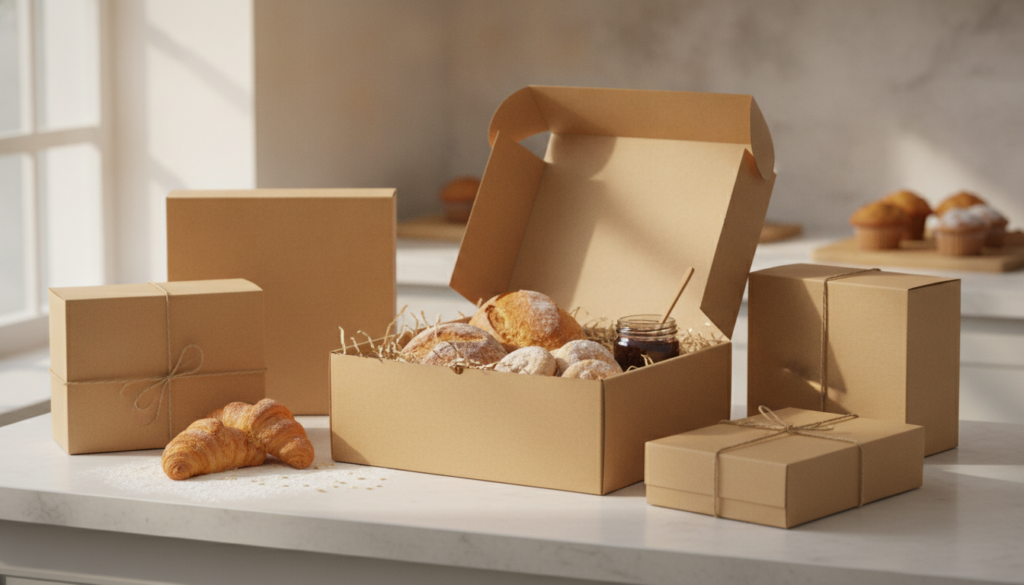
Custom food boxes in Australia have to do two jobs at once. They need a food-safe construction that suits whatever goes inside, and a finish that carries your brand through the whole customer experience. Food-grade packaging uses fibres, inks and any liners or coatings that are suitable for food contact, matched to whether the box actually touches food or simply ships a sealed product. When those choices are made properly you protect the food, meet the expectations of your retail and food-safety obligations, and hand the customer a pack that is genuinely worth photographing.
This guide walks through what “food-grade” really means for cardboard, the materials and barriers that make a box food-safe, when direct contact matters, and how to order compliant custom boxes even as a brand-new food startup.
What does “food-grade” mean for cardboard packaging?
Food-grade means a box is made and finished so it is safe to use with food, using materials suitable for food contact and, where the cardboard touches food directly, an appropriate barrier. It is less about a single stamp and more about matching the board, coatings and inks to the food, the contact time and the conditions it will face.
The food itself drives the decision. A dry biscuit, a greasy pastry and a chilled salad all place very different demands on the same carton. The core concern with any food packaging is migration, which is the risk of substances transferring from the packaging into the food. Reputable food-suitable board, food-safe printing kept away from the contact surface, and a barrier that suits the product all work together to manage that risk. Because the correct specification depends on your exact product, we confirm the food-contact requirements with you when we quote rather than guessing.
Which materials and coatings make a box food-safe?
A food-safe box usually starts with clean, food-suitable fibre board, then adds a barrier only where the food actually calls for one. The aim is to protect the food without over-engineering the pack or wrecking its recyclability.
For dry goods such as biscuits, confectionery, tea or baked treats, a good food-suitable board is often enough on its own. Oily and greasy foods, think pastries, burgers or fried items, generally need a greaseproof liner so the fat does not soak through. Chilled, moist or frozen products usually call for a moisture-resistant coating or liner that holds up in a fridge or freezer without going soggy. Printing is kept on the outer surface so your artwork never sits against the food. Heavier plastic laminates and coatings give you the strongest moisture resistance, though they can make recycling harder, which is a trade-off worth weighing early. If you are unsure which barrier your product needs, our team will help you land on the lightest option that still does the job.
Do you need direct-contact or secondary food packaging?
It comes down to one question: does unwrapped food touch the cardboard? Direct-contact packaging, such as a bakery box, a burger clam or a produce tray, must be food-grade on the inside surface. Secondary packaging, such as a shipper wrapped around sealed jars or pouches, needs to be clean and sturdy, but it never actually meets the food.
This distinction saves a lot of money and confusion. Most food e-commerce ships in secondary packaging, because the product inside is already sealed in its own jar, pouch or wrapper. In that case the outer box protects and brands the order rather than contacting the food, so you get more freedom on finishes. Gift hampers work the same way. If you sell fresh bakery, deli, produce or anything unwrapped, then you are firmly in direct-contact territory and need food-suitable board with the right barrier. Not sure which camp you sit in? Our packaging solutions team will map it out with you before anything goes to print.
Ready to talk specifics? Request a quote with a quick description of your product, or browse the shop to see stock formats you can build on.
Are custom food boxes recyclable and sustainable?
Plain and printed cardboard is one of the most widely recovered materials in Australian kerbside recycling, which is a big reason fibre-based food packaging appeals to shoppers who actually check the bin before they buy again. The catch is that heavy plastic laminates and some barrier coatings can reduce how recyclable a pack is, so the barrier and the recycling story need to be balanced together rather than treated separately.
Australian food brands increasingly work toward the national packaging targets coordinated by the Australian Packaging Covenant Organisation (APCO), and many use the Australasian Recycling Label (ARL) so customers know exactly which bin a pack belongs in. Major retailers now expect that kind of clarity from their suppliers. We help you get there in practical ways: specifying the lightest barrier that still protects the food, using water-based inks where possible, and right-sizing the box so you use less material and less freight. Because recyclability depends on the final construction, we confirm where your pack lands before you commit to a run.
How do you brand food boxes for e-commerce, hampers and bakeries?
Branding is where food packaging earns repeat customers, because the box is often the first physical thing a shopper touches from your brand. Full-colour printing on the outer surface lets you run photography, your logo and a provenance or ingredients story without ever coming near the food-contact surface inside.
For online orders and gift ranges, printed full-colour boxes turn a plain delivery into an unboxing moment that people share. Subscription snack ranges and gourmet hampers do particularly well in branded mailer boxes, which give you strong shelf-style presence the second the courier bag comes off. Bakeries, cafes and delis can carry the same look onto printed lids and sleeves, so the pack behind the counter matches the one that arrives at a customer’s door. In every case the rule stays the same: print the outside, keep the inside clean and food-appropriate.
How do you order compliant custom food boxes with no minimum?
Ordering starts with a short conversation about the food, not the box. Tell us what goes inside, whether it touches the cardboard, whether it is dry, greasy, chilled or frozen, and where it will be sold. From there we specify a food-suitable board, the right barrier and a print finish that fits your brand.
Because we set no minimum order quantity, a brand-new food startup can trial a single short run before committing to volume, which takes a lot of risk out of launching a product. We make everything in our own Australian factory with fast local turnaround, so you are dealing with the maker, not a reseller passing your job down the line. When you are ready, request a quote and we will confirm the exact food-contact specification for your product as part of the process.
Why order from an Australian food-packaging maker
We manufacture in-house here in Australia rather than importing and rebadging, so your food boxes are made from eco-friendly, 100% recyclable materials, printed in full colour on our own digital and offset presses, and turned around quickly without a minimum order standing in your way. That combination lets small food brands start lean and scale on their own terms, while established brands keep tight control over quality, timing and the food-safe specification.
Frequently asked questions
Sources and references: general Australian food-packaging practice for food-contact materials and barriers; the Australian Packaging Covenant Organisation (APCO) national packaging targets and the Australasian Recycling Label (ARL) program for recyclability and on-pack labelling; and our own experience manufacturing custom food-grade boxes in Australia. Exact food-contact requirements vary by product and should be confirmed for your specific application when you request a quote.