
Buying custom boxes at volume in Australia should lower your per-unit cost without locking you into a pallet you do not need yet. That is the promise of proper wholesale packaging, and it is very different from the high minimum order quantities most suppliers use to protect their setup costs. This guide walks through how bulk box pricing really works, where the savings come from, and how to capture them without tying up your cash or your warehouse.
What does “wholesale custom boxes” actually mean?
Wholesale custom boxes means buying printed or plain cardboard packaging in larger runs so the cost of setup and printing is spread across more units. The more boxes you produce in one run, the cheaper each individual box becomes, because the fixed costs stay roughly the same whether you print two hundred or two thousand.
Here is the part that trips buyers up. Wholesale pricing and a forced minimum order are two separate things. You can get genuine volume rates without a supplier insisting you take five thousand units before they will speak to you. The economics reward larger runs on their own, so a good manufacturer lets the price reflect your quantity rather than gatekeeping it behind a minimum.
How does per-unit pricing really work on bigger runs?
Every custom box carries a mix of one-off costs and repeating costs. The one-off costs cover things like artwork setup, colour matching, and preparing the cutting profile for your box size. The repeating costs are the board, the ink, the labour, and the folding or gluing per box.
When you order a small quantity, that fixed setup gets divided across just a few boxes, so it weighs heavily on each one. Order a larger run and the same setup spreads thin, which is where the real per-unit drop comes from. Beyond a certain point the curve flattens, because you are mostly paying for materials and machine time, and those scale fairly evenly.
For most Australian businesses, the sweet spot sits in the middle: a run big enough to soften the setup cost, but not so big that you are warehousing stock you will not ship for a year. Working out that number is exactly what a quote conversation is for.
Why do traditional suppliers push such high minimum orders?
Traditional box suppliers lean on offset and flexographic printing, which need physical plates, dies, and careful colour setup before the first box comes off the line. That preparation is expensive, so those suppliers only make money when they spread it across thousands of units. The minimum order quantity is simply the point where the maths starts working in their favour.
The catch is that their production model becomes your problem. A five thousand unit minimum suits the factory’s press, not your monthly shipping volume. You end up ordering to fit their machinery rather than your demand, which is where a lot of packaging budgets quietly go to waste.
What do high MOQs really cost your business?
A forced minimum looks like a bulk saving until you count what it ties up. Paying upfront for thousands of boxes locks your working capital into cardboard sitting on a shelf, money that could be funding stock, ads, or hiring instead. That opportunity cost rarely shows up on the invoice, yet it is real.
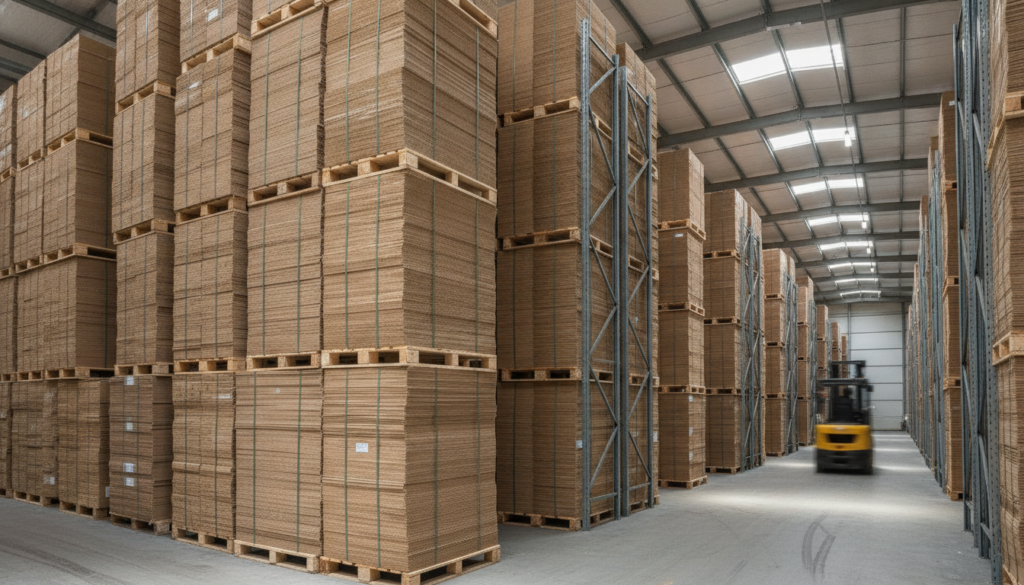
Then there is the space. Pallets of unused packaging fill shelving you are often paying rent on, and they are vulnerable to damp, crushing, and general warehouse wear over time. If your branding changes, or a product size shifts, that leftover stock can turn into waste before you have used half of it.
In our own conversations with growing Australian brands, the most common regret we hear is not paying a little more per unit on a smaller run. It is having ordered far too many of the wrong box and writing off the remainder a year later.
How does buying direct from a manufacturer change the maths?
Buying direct from the factory removes the reseller margin that sits between you and the production line. When a middleman sources your boxes from a manufacturer, their markup is baked into every unit, and they often impose their own minimums on top to make each order worth handling. Going straight to the maker cuts that layer out.
There is a second advantage that matters just as much. A manufacturer controls the schedule, the print method, and the run size directly, so it can offer volume pricing on a run while still being flexible about quantity and timing. You are negotiating with the people who actually make the box, not a broker relaying your request to someone else.
Custom Boxes Australia runs its own factory rather than reselling, prints full colour with digital and offset options, and makes everything locally for fast turnaround on eco-friendly, fully recyclable board. That combination is what lets us quote real volume pricing without demanding a minimum to unlock it.
Ready to see your numbers? Get a quote with your box size and quantity, or browse ready options in the shop to compare.
Can you get volume pricing without ordering everything at once?
Yes, and staggered production is how smart bulk buyers do it. You agree on a total volume so the pricing reflects the larger commitment, then schedule the boxes to be produced and delivered in batches across the year. Your per-unit cost stays low while your storage and cash exposure stay sensible.
This scheduled-run approach suits businesses with steady or seasonal demand. You might take a first delivery now, a second before your peak trading period, and a third to follow. The buyers who save the most are rarely the ones chasing the single biggest order. They are the ones who commit to a volume for the price, then meter the deliveries to match how fast they actually ship, so they never pay to warehouse boxes they will not use for months.
What is a smart storage and reorder strategy for bulk boxes?
A good storage and reorder plan keeps enough packaging on hand to trade without interruption, while avoiding a warehouse full of dead stock. Start by working out your true monthly box usage, then hold a buffer that covers your supplier’s production and delivery lead time plus a little safety margin for busy weeks.
For reordering, set a simple trigger point rather than waiting until the shelf is bare. When your on-hand quantity drops to your buffer level, that is the signal to release the next scheduled batch or place a fresh run. Standardising on a smaller set of box sizes helps too, because consistent standard boxes and reusable pallet boxes are easier to forecast, stack, and reorder than a sprawl of one-off dimensions.
Volume pricing when you want it, never a forced minimum
Our position is straightforward. You get better per-unit pricing as your run size grows, and you never have to hit a minimum before we will make your boxes. If you want a single trial box to check the print and fit, we will make one. If you want a scheduled bulk run at volume rates, we will price that too, from the same factory floor.
That flexibility is the whole point of buying from a maker rather than a reseller. Smaller and mid-sized buyers are not an afterthought here, and you can see exactly how the process runs on our how it works page. If you specifically need to order in very low quantities, our guide to no minimum order packaging covers that side in detail.
Whether you are scaling up or just testing the water, tell us your box, your quantity, and your timing. Request a quote for volume pricing, or step into the shop to get started today.
Sources and references: Custom Boxes Australia production and pricing practices; general corrugated packaging setup-versus-materials cost principles. For a tailored bulk quote, contact Custom Boxes Australia on 1300 990 993.