
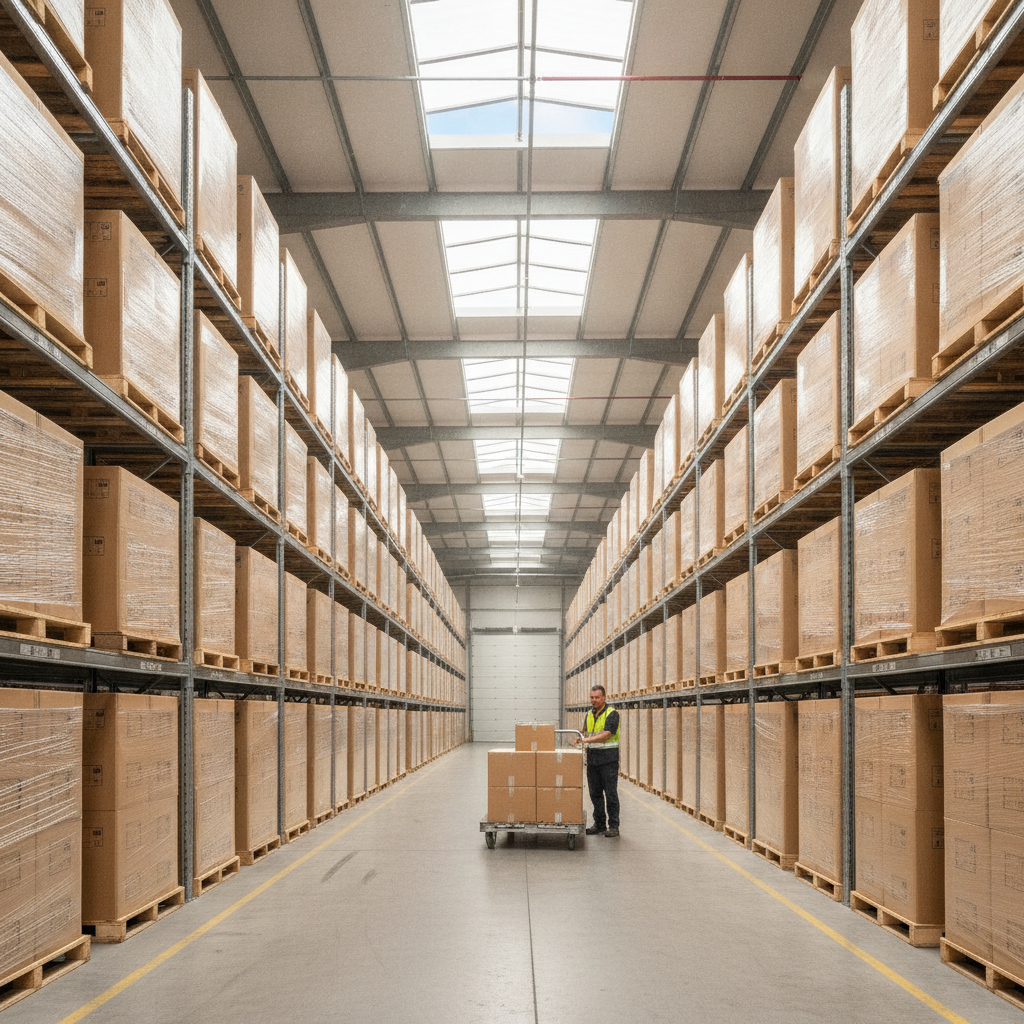
Warehouse packaging solutions are the boxes, inserts and bulk supplies a storage or fulfilment operation uses to protect, stack and ship goods at volume. The right system cuts product damage, speeds up dispatch, and uses less storage space. This guide walks through the main box types, how to match them to your load, and how to buy them in Australia without committing to a huge minimum order.
Key takeaways
- Match the box to the load, not the other way around. Custom-sizing eliminates void fill, reduces damage, and keeps freight weight down.
- Honeycomb and heavy-duty corrugated carry industrial loads at a fraction of the weight of timber crates.
- Stackable pallet boxes turn floor space into vertical storage and standardise handling.
- No minimum order lets you trial a configuration on one line before rolling it out across the warehouse.
What are warehouse packaging solutions?
Warehouse packaging solutions cover every box and protective material used between receiving stock and dispatching it: pallet boxes for bulk storage, heavy-duty cartons for bulky goods, honeycomb panels and inserts for fragile items, standard cartons for everyday picking, and flat-pack boxes that store flat until needed. A good system is consistent (a small range of sizes everyone knows), stackable, and sized to your actual products so nothing rattles in transit.
How do you choose the right warehouse box?
Start with three questions about each product line:
- How heavy and how fragile is the item? Heavy or fragile goods need honeycomb or heavy-duty corrugated; light, robust items run fine in standard cartons.
- Will the box be stored, stacked or shipped? Storage and stacking demand compression strength and a flat, square footprint. Shipping rewards the lightest box that still protects.
- What is the throughput? High-volume picking lines benefit from a small set of standardised sizes; low-volume or one-off freight can use made-to-measure boxes.
Sizing to the product is the single biggest lever. An oversized box wastes void fill, adds weight to every consignment, and is more likely to crush when stacked. Because we make custom standard boxes to any dimension, you can right-size each line instead of forcing products into stock cartons.
Which box type suits which warehouse job?
Bulk storage and freight: pallet boxes
Pallet boxes are heavy-duty, stackable containers sized to a standard Australian pallet. A base-wall-lid construction lets you stack units safely for storage and transport, turning floor space into vertical capacity. They suit parts, components, bulk SKUs and anything moved by forklift.
Heavy or oversized items: bulky goods boxes
Bulky goods boxes handle awkward, heavy or oversized products that standard cartons cannot. Double-wall corrugated construction holds shape under weight and through multiple handling points.
Fragile and high-value goods: honeycomb
Honeycomb boxes and inserts provide higher compression strength at a lower weight than corrugated, which is why they replace timber crates and foam for heavy or delicate loads. They are 100% paper-based and fully recyclable, so they also simplify your waste stream.
Everyday picking: standard cartons
Custom-sized standard boxes cover the bulk of daily dispatch. Keeping a tight range of sizes that match your top SKUs speeds up packing and reduces errors.
Space-saving storage: flat-pack
Flat-pack boxes ship and store flat, then assemble when needed, so you are not paying to warehouse empty air. They are ideal where storage space is tight or demand is seasonal.
How do you reduce packaging costs in a warehouse?
- Standardise sizes so packers reach for the right box without thinking and you buy in efficient runs.
- Right-size each line to cut void fill and drop consignments into a lower freight bracket.
- Switch heavy timber or foam to honeycomb to save weight and disposal cost.
- Use flat-pack to reclaim storage space.
- Order without a minimum so you can test a new configuration on one line before scaling it.
Why does no minimum order matter for warehouses?
Most suppliers force large minimum runs, which means you commit thousands of dollars to a box size before you know it works on the floor. With no minimum order, you can prototype a single pallet box or carton, run it through real picking and stacking, and only scale the sizes that prove out. That removes the risk from changing your packaging system.
Australian-made production also shortens lead times: you reorder fast when a line moves, instead of waiting on imported stock.