
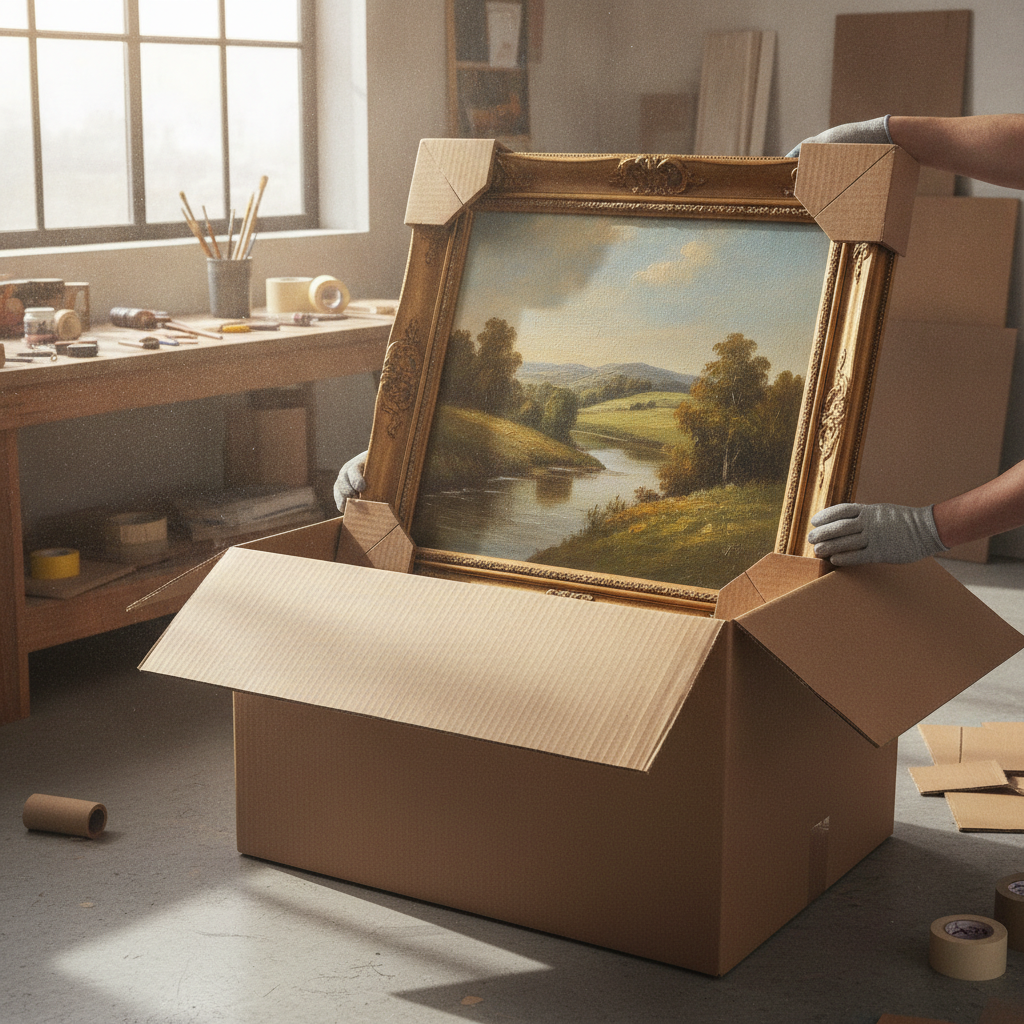
Shipping a painting, sculpture, ceramic or framed print across Australia means protecting it from impact, vibration, pressure and moisture over long distances. Done right, the piece arrives exactly as it left. Done wrong, a single knock in transit can destroy something irreplaceable. This guide walks through how to pack and ship art and fragile items so they survive the journey.
What makes art and fragile items hard to ship?
Fragile goods fail in transit for predictable reasons:
- Impact from drops and rough handling at sorting depots.
- Compression when other parcels are stacked on top.
- Vibration over hundreds or thousands of kilometres of road freight.
- Surface damage from movement inside an under-packed box.
- Moisture from temperature swings and humidity.
The goal of good packaging is to absorb shock, immobilise the item, and resist crushing, all the way to the door.
Step 1: Protect the surface
Start at the item itself. Cover the face of a painting or print with glassine or acid-free paper so nothing sticks to or marks the surface. Wrap ceramics, glass and sculptures in soft tissue first, then a cushioning layer. For framed work with glass, tape a low-tack grid across the glass so that if it ever cracks, the shards stay in place rather than slicing the artwork.
Step 2: Cushion and immobilise
Movement is the enemy. Once the surface is protected, build a cushioning layer that holds the piece dead-centre, away from every wall of the box:
- Use foam, honeycomb inserts or moulded protection sized to the item.
- Fill voids so the piece cannot shift, but avoid over-compressing delicate corners.
- For framed art, protect the corners specifically, since that is where impact concentrates.
A custom-cut insert that matches the item is far safer than loose fill, because it keeps the piece suspended in the strongest part of the box.
Step 3: Choose the right box
This is where most fragile shipments are won or lost. A flimsy carton flexes, crushes and transmits shock straight to the contents. For art and fragile goods you want a rigid, high-strength box that resists compression and stacking loads.
Honeycomb construction is the standard for serious art logistics. Honeycomb board gives you the compression strength of timber crates at a fraction of the weight, and it is fully recyclable. For valuable or awkward pieces, a purpose-built art logistic box sized to the exact dimensions of the work removes the gaps and weak points that generic boxes leave behind.
For large, heavy or very valuable items, a double-box (a cushioned inner box inside a stronger outer box) adds a second shock-absorbing layer.
Step 4: Seal, label and document
- Seal all seams with strong packing tape using the H-taping method.
- Mark the box “FRAGILE” and “THIS WAY UP” clearly on multiple faces – but treat labels as a backup, not a substitute for proper packing.
- Photograph the item before packing as a condition record in case of an insurance claim.
- Insure high-value pieces for their full value.
Step 5: Choose the right freight method
Match the carrier and service to the value and fragility of the piece. For high-value or large works, a specialist art or fragile-freight service with careful handling is worth the premium over standard parcel post. Always confirm the carrier’s handling and insurance terms for fragile goods before booking.
Common mistakes to avoid
- Box too big: extra space lets the item move and absorb impact. Size the box to the piece.
- Loose fill only: packing peanuts alone do not immobilise a heavy or framed item.
- Reused weak boxes: a soft, previously-crushed carton has lost its strength.
- No corner protection: corners take the hardest hits, especially on frames.
- Skipping the condition photos: without them, an insurance claim is far harder.
Packaging checklist for shipping art and fragile items
- Surface protected (glassine/tissue, glass taped)
- Cushioned and immobilised with fitted inserts
- Rigid, high-strength box (honeycomb or art logistic box) sized to the item
- Voids filled, corners protected
- Seams H-taped, FRAGILE/THIS WAY UP marked
- Condition photos taken, insurance arranged
- Appropriate freight service booked
Need packaging built for fragile goods?
If you ship art, ceramics, electronics or any delicate product regularly, custom protective packaging pays for itself in reduced damage and returns. Our art logistic boxes and honeycomb boxes are made to your dimensions in Australia, with no minimum order. Request a quote and we will recommend the right construction for your pieces.